
Abstract
Integrating leisure facilities can significantly enhance the liveliness of city centres. This transformation has led to the emergence of lifestyle centres — environments where living, visiting, working, shopping, socialising, sports and recreation coexist and reinforce one another, generating a unique dynamic.
Places such as Manchester, Eindhoven and Copenhagen provide interesting examples of lifestyle centres. Leisure is not the only solution; the combination and integration of all these different functions create the dynamic environment.
This experience economy philosophy was first proposed by Pine and Gilmore. This article explores the advantages of integrating leisure with other functions in city centres, how to get this process started and the role of the experience economy strategy.
Keywords: lifestyle centres, experience economy, cities, leisure, urban regeneration
The continuous change of inner cities
Cities are changing. As the result of a continuous process since the emergence of urban areas, in recent decades they have transitioned from purely commercial locations into meeting places and living environments where multiple functions connect, from working and shopping to sports, socialising, recreation and leisure.
All have a specific value and importance. This is not new, however. In the past, cities — and specifically city centres — combined several of these functions to become ‘the place to be’.
Axel Christophersen stated in his article on medieval towns that “the medieval urban landscape can be reformulated as a dynamic social space”. A famous example of such a dynamic city centre in the Middle Ages is Piazza del Campo in Siena.
Nowadays leisure, as one of these functions, still hardly gets the attention it deserves in city centre developments. In this article, I will address the strategic role that leisure should play in such processes and what the potential added value could be.
Leisure helps ensure that inner cities develop into lifestyle centres, where all the functions mentioned come together in an appropriate mix that creates memorable and engaging experiences, rather than standard services and products.
What do we mean by leisure?
To gain more insight into the role that leisure can play, it is essential to first clearly define the term. What exactly are we talking about? Unfortunately, there is no clear, unambiguous definition.
Leisure generally refers to all activities that one undertakes that are not tied to work, care or specific basic needs. A widely used definition is:
Leisure includes a range of leisure activities that promotes relaxation, recreation, cultural experience, social interaction and personal enrichment and contributes to the well-being of individuals and communities.
Leisure activities and facilities include more than the ‘classic’ leisure sectors, such as hospitality, theatres, playgrounds, entertainment centres and sports facilities. Think of:
- The use of informal public spaces: squares, parks, water features and art in public spaces.
- Experience-targeted initiatives: pop-up events, street art tours, food trucks and escape rooms.
- Digital leisure: augmented reality and virtual reality experiences in public spaces and interactive city applications.
- Participatory activities: city garden projects, neighbourhood parties and city walks led by residents.
All these different forms of leisure serve as a basis for enlivening a city centre environment. Leisure acts as a connector and integrator and brings specific value to a city centre.
The time is ripe for a paradigm shift: leisure as a strategic building block and a binding element for city centre development. Leisure should no longer be considered a residual category, but an important sector in its own right, together with the essential role it plays in society.
According to the World Bank, tourism accounted for 10 per cent of the global economy in 2024, with jobs in this sector totalling approximately 357 million.
City centres obtain renewed energy from embracing and cultivating their leisure potential. Leisure is not the whole solution for creating dynamic and vivid cities and city centres, but it certainly plays an important part in attracting and reinforcing the necessary mix of functions.
The Dutch population undertakes approximately 3.6 billion leisure activities annually, of which no fewer than 40 per cent take place in their own city, a significant number of them in the city centre, including shopping, socialising and cinema visits.
Urban areas should be considered as mixed landscapes, with leisure providing a facility for residents and tourists alike. This immediately indicates the important role of leisure in the development of a city.
Although not every space has or needs to have a leisure function, it is essential to give the sector the place it deserves in urban planning policy and implementation, and to recognise and acknowledge the value of this development.
What value does leisure create?
- Entertainment encourages people to visit a city centre and also stay there longer. The number of visitors increases by about 5 per cent and the length of stay potentially by 1.5 hours. This applies not only to the Gen Z group, aged 11–26 years, but also to Millennials and Gen X. Not only is the number of visitors and visits increasing, but new target groups are also visiting the city and providing a social and economic impulse.
- Green spaces, essential for a recreational environment, not only contribute to more biodiversity, but also ensure a healthier population. In addition, research in the UK shows that no fewer than 12 per cent of visitors are willing to travel further to a city centre where there is plenty of greenery.
- In addition to direct income, leisure facilities and activities also provide about 10 per cent extra income for other companies, such as shops. Other studies show that the total turnover of companies in the city centre increases by approximately €250 per m² per year by adding leisure facilities.
- Approximately 40 per cent of the choice to visit a particular city is determined by the presence of leisure facilities.
- European research shows that staying in urban leisure zones reduces stress in people by 8–12 per cent and that visits to these areas promote overall social well-being. Research in the UK capitalised the increase in physical and mental well-being at €8.5bn.
- Sports and exercise spaces, such as bootcamp facilities, skate parks and football pitches, provide a 15 per cent increase in active people.
- Leisure in public space promotes the use of more sustainable forms of mobility: fewer car journeys, more walking and cycling and greater use of public transport.
- Pop-up initiatives show that a circular economy is possible within leisure, from reusable materials to local production.
- Leisure enhances the attractiveness of an environment for workers and residents, leading to an average increase in rental and real estate values of 5–10 per cent.
Which leisure facilities and activities fit in a city centre?
Fitting leisure facilities and activities requires customisation and depends on issues such as the size of the market, the target groups present, the available space and the facilities already in place.
To achieve an appropriate mix of attractions and facilities, it is helpful to look at developments not only in other city centres, at home and abroad, but also at shopping malls, airports, theme parks and indoor and outdoor entertainment centres.
This reveals interesting insights into how unique mixes of facilities and attractions on site attract increased visitor flows. Examples of interesting malls, parks and centres are:
- Europapark, Rust, Germany.
- Dream Island, Moscow, Russia.
- Gravity Max, London, UK.
- Mandoria Amusement Park, Rzgów, Poland.
- Disney, Paris, France.
Research carried out on the right mix of facilities and attractions in shopping centres in Europe and the US reveals the following results:
- 75 per cent of the space is used by shops and services.
- 20 per cent consists of food and beverage outlets.
- 5 per cent consists of leisure.
The following facilities and attractions can play a role in the range of leisure provision in a city centre:
- Cinemas.
- Bowling.
- Food and beverage outlets, including bars, sports bars and restaurants.
- Play zones and indoor play.
- Family entertainment centres.
- Immersive attractions using augmented and virtual reality.
- Gaming centres.
- Water playgrounds and ponds.
- Green strips, parks, squares and sports facilities.
- Edutainment centres, such as children’s museums.
- Museums and art centres.
- Events.
- Space for temporary pop-up attractions.
- City gardens.
Why is leisure often not a full part of city centres?
In the Netherlands, about 1.5 per cent of all space consists of parks and plantations, with about 0.5 per cent having a recreational function.
Research on the leisure network in the Netherlands emphatically indicates a huge lack of recreational space and facilities in both urban and rural areas. Other forms of space use prevail, with the current focus mainly on living. But it could be argued that prominent attention to leisure is essential to creating a beautiful, healthy and dynamic living environment.
Although the added value is clear, leisure still receives far too little attention in spatial policy plans and projects, among other things. Also, few links are made with related policy areas such as sport, healthcare, nature, environment and culture.
Several leisure organisations, like the Club of Elf and HISWA-RECRON, have been pointing out this shortcoming for years, but they have hardly been heard to date. Policymakers, municipalities and developers are still little guided by leisure.
The following are the most important bottlenecks faced by fully fledged leisure integration in city centres:
- There is a lack of policy culture and vision in the field of leisure. In addition, there is hardly any integral management of policy within governments. An interesting fact is that the major cities of the Netherlands — Amsterdam, The Hague and Rotterdam — have no clear leisure strategy. The global city development strategy is based on strengthening the local economy while protecting the quality of life for residents and the natural environment.
- Initiatives for leisure facilities and activities often clash with zoning plans and rigid licensing conditions, thus presenting a hindrance rather than a stimulus.
- Banks and investment funds do not view leisure as an interesting investment option. Attractions are often seen as something temporary, and as a result parties lack certainty with regard to their investments. This situation is more critical in the Netherlands than in the UK, where other forms of financing apply and there is more appetite to invest in risk-bearing projects. A possible solution could be a dedicated leisure investment fund.
- In city centres, shops and offices are considered economic engines. Leisure remains a marginal product and is seldom part of land exploitations or real estate developments.
- Project developers and property owners are barely interested in leisure, which typically yields lower revenues than retail, homes or offices. Partly because of this, leisure is only considered when there is space available that is unsuitable for these alternative uses.
- There is still a significant lack of unambiguous data on aspects such as visitor spending, visitor flows and health effects. The Netherlands has recently established the National Data Alliance to stimulate monitoring and research and the collection and distribution of data, which will help create an understanding of the importance of leisure.
Dynamic city centres are lifestyle centres
As stated above, a mix of facilities and activities creates a dynamic city centre, where a variety of functions come together that reinforce and complement each other. This environment can be characterised as a lifestyle centre.
City centres and large shopping malls are transforming into such centres. The following are three examples of locations where this transformation has partly occurred:
- CentrO, Oberhausen, Germany: part of the Neue Mitte Oberhausen, with some large leisure facilities such as LEGOLAND.
- Westfield, London, UK: with over 80 restaurants and bars.
- Mall of Scandinavia, Stockholm, Sweden: presents itself as a lifestyle concept with a large number of facilities and attractions.
 What defines a dynamic city centre? The power of creating memorable and engaging experiences.
The lifestyle centre model describes the major functions that come together in such a centre. By applying this model to create a mix of functions, leisure occupies the role it deserves in a new-style city centre development.
In 1999, Pine and Gilmore pioneered the ‘experience economy’, which prioritises creating memorable and engaging experiences that focus on a human-first strategy.
It is no longer about a standard service or product. Rather, it is a combination of entertainment, escapism, education and aesthetics.
This philosophy can be considered the glue between the different city centre functions and helps to create real lifestyle centres. When city centres are developed based on the experience economy philosophy of creating unique experiences, they become attractive and memorable visitor destinations.
These visitors will in turn become part of an effective marketing strategy by functioning as ambassadors for these places. They will use social media to talk about their experiences, reaching a wide range of potential future visitors.
The importance of leisure therefore supports the case for an experience economy strategy in which unique lifestyle centres put the experience of people first and, by doing so, create high value for all stakeholders.
Dynamic city centres or lifestyle centres: Three unique European examples
The following cities are excellent examples of places with dynamic centres — or, better, lifestyle centres.
They have created a successful mix of functions and activities. In these centres, the experience economy strategy functions as the glue and the basis of all activities.
Copenhagen, Denmark: Public parks as leisure hubs
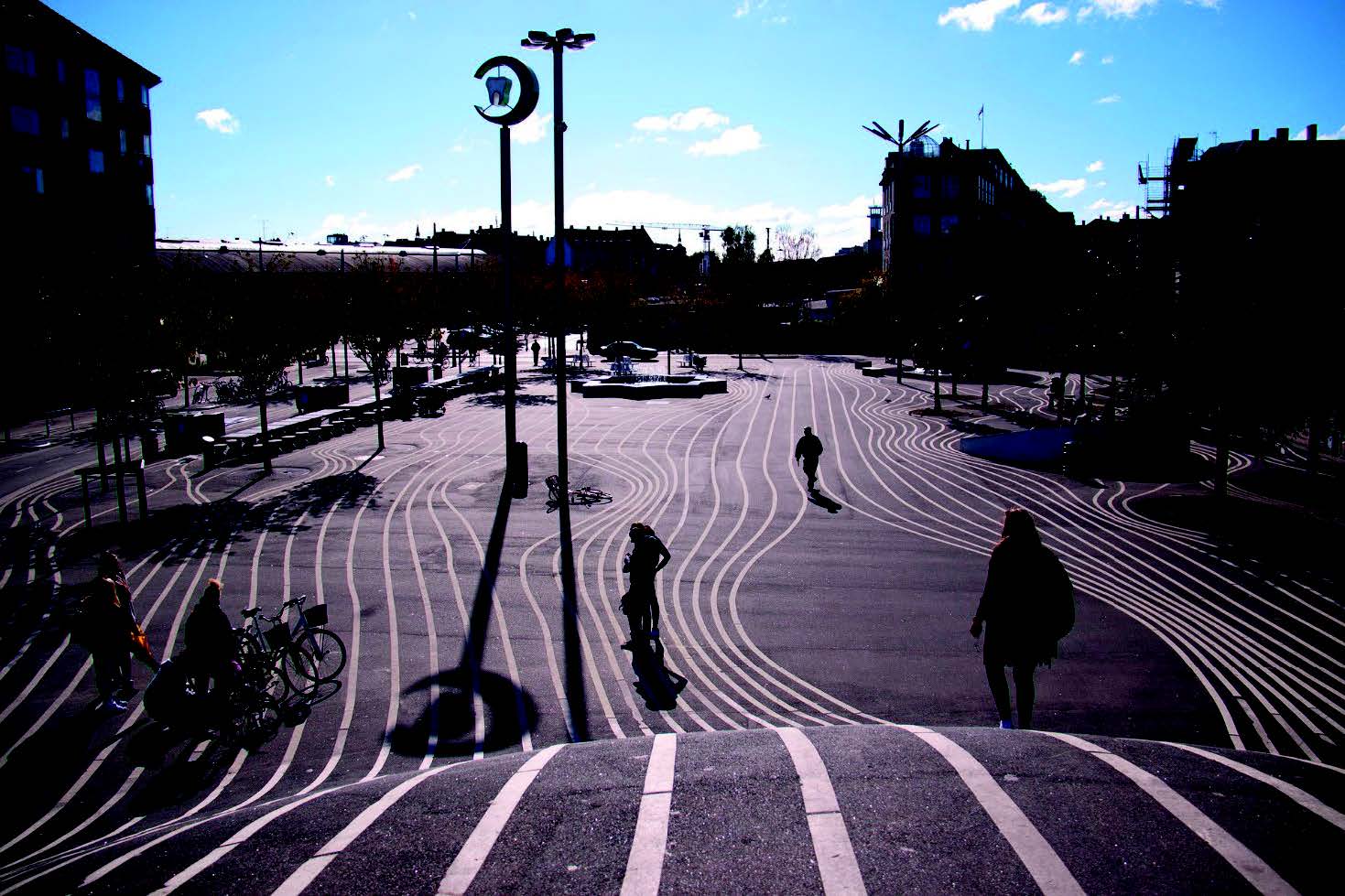
In Copenhagen, city parks such as Superkilen in Nørrebro and Amager Strandpark have transformed from traditional landscaping into lively urban hubs.
Superkilen integrates sports, art, food kiosks and children’s play areas. The park attracts an estimated 300,000 visitors annually and is a base for business events, neighbourhood activities and tourism.
The effects on the city are significant:
- Economy: additional spending on hospitality, souvenirs and events of €1.5–2m per year.
- Health and liveability: residents report clearly improved mental health, with 10 per cent less stress.
- Social cohesion: encounters between different ethnic and age groups are increasing, with a 25 per cent increase in neighbourhood interactions.
 Manchester, UK: Transformation from industrial city to the entertainment centre of Northern England
UK city centres are somewhat similar to those in the Netherlands, with the main feature being many vacant shops. One source reports the average vacancy in the UK as 29 per cent, while other sources report an overall vacancy of 16.8 per cent for the Northwest and 13.3 per cent for the whole country.
In Manchester, despite once being considered an impoverished industrial city, the centre is lively, dynamic and cheerful, facilitated by a mix of new facilities, events and decorative art in the streets and on buildings.
The city is no longer characterised by industrial decline but is now known for research excellence, business strength and vibrancy, attracting new residents and visitors.
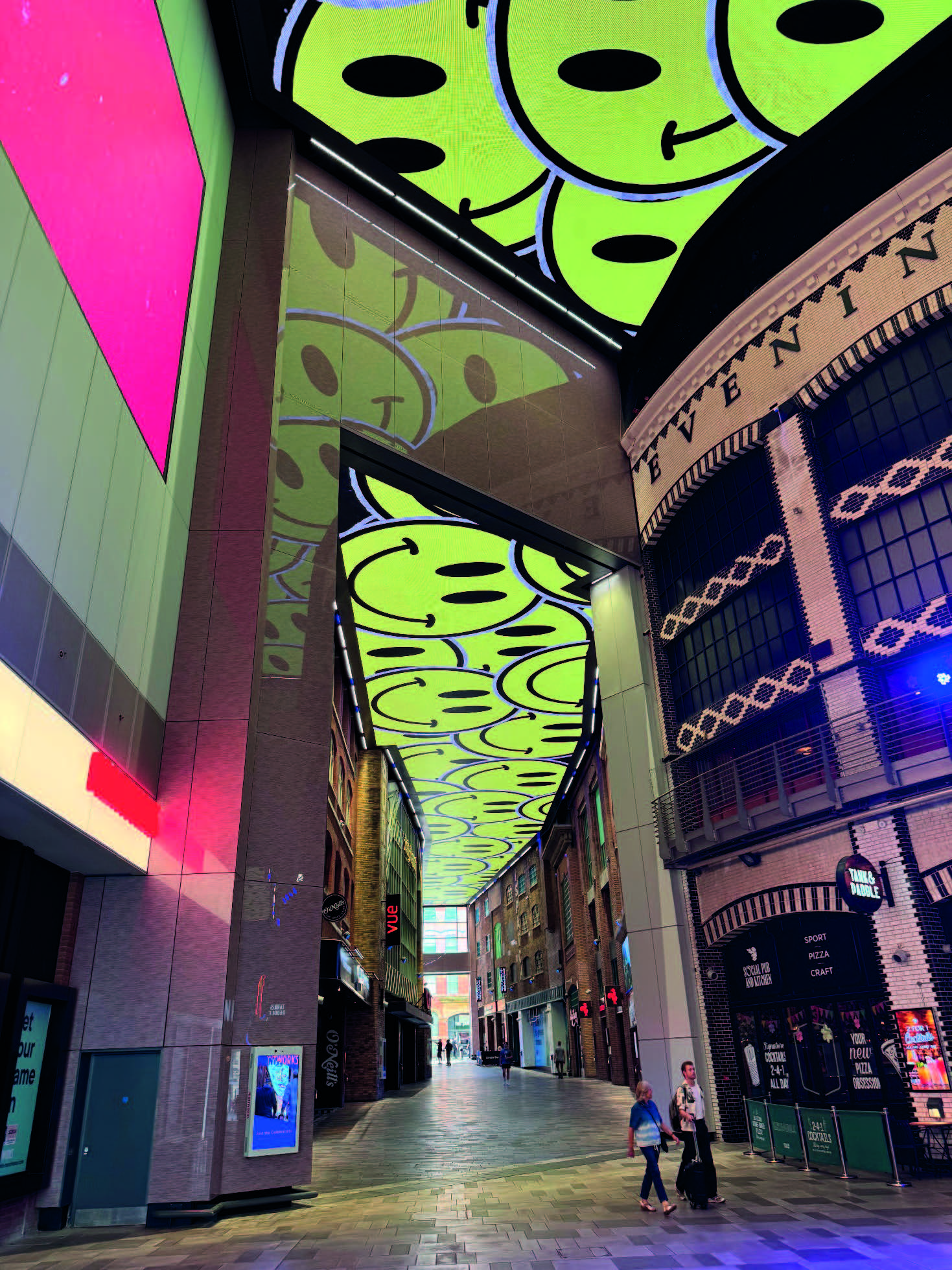
The redevelopment of the Northern Quarter comprises many vintage shops, unique hospitality concepts and art, including the famous Printworks. The latter complex is characterised by a mix of sports, entertainment and hospitality venues and is a well-conceived redevelopment of a former industrial site.
Manchester is a vibrant city with further development planned. Museums are being upgraded, events are being organised and interactive routes, such as Music of the Senses, further enhance visits to the city.
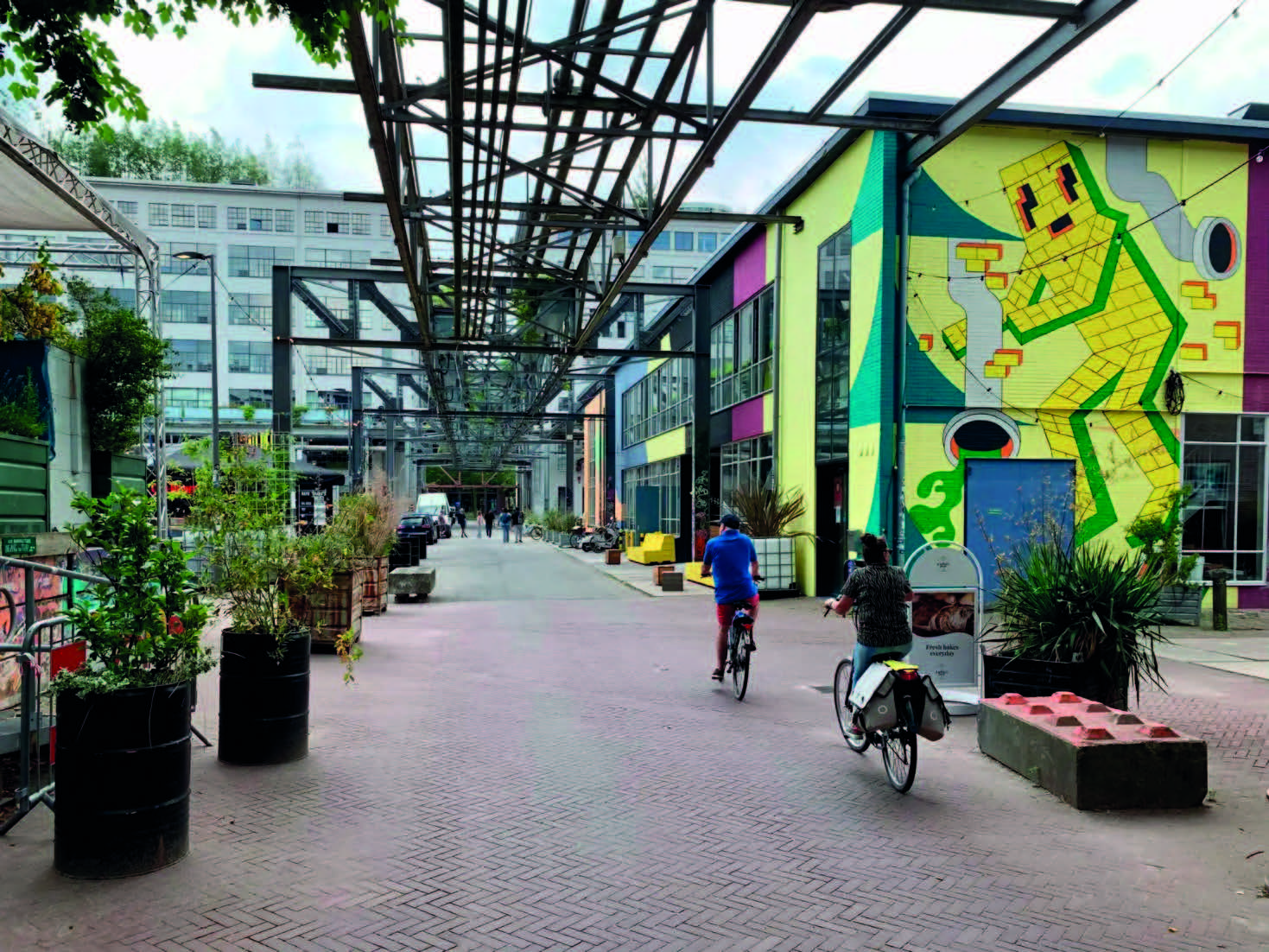
 Eindhoven, the Netherlands — Strijp-S: The new heart of Eindhoven
Eindhoven — like Manchester, a former industrial city which was previously dominated by one company, Philips — is another example of a lifestyle centre.
The former Philips buildings, partly located on Strijp-S, have been transformed into a unique area. A mix of facilities ensures an unprecedented dynamic where people want to live, work and recreate.
Strijp-S has emphatically become the new hotspot of Eindhoven, with the annual highlight being the design days, where innovation is central and the city — specifically Strijp-S — shows what it stands for: dynamics, strength, liveability, entertainment, renewal and relaxation.
Strijp-S is the new ‘place to be’ and the perfect example of a lifestyle centre in the Netherlands. It has put Eindhoven back on the map and thus attracts new visitors and residents.
Particularly young people have discovered Strijp-S as a unique hotspot and the new centre of the city.
 How to create a dynamic city centre or a lifestyle centre
Five concrete recommendations
The following recommendations can help all parties involved strengthen the role of leisure in city centres and create lifestyle centres.
1. Integrate leisure as a connecting link in vision and policy
Integrate leisure as a structural part of a vision on the development of lifestyle centres.
Appoint employees within a government agency to coordinate between departments and with stakeholders. They should also be made responsible for the preparation and implementation of appropriate policies.
Set measurable quantitative policy goals. For example: what percentage of the city centre should be available for leisure as part of the overall development?
Reserve financial resources for small-scale pilots and make them possible through a flexible licensing system, under the guise of doing, evaluating and adjusting — the so-called design thinking method — and ensure good monitoring.
2. Facilitate collaborations between parties
Stimulate collaborations between leisure organisations, retailers, residents, companies and artists, among others.
This creates unique combinations, enabling mutual understanding at an early stage and stronger involvement in the development of different spaces.
This often results in unique projects, such as pop-up art and performances or artist-in-residence stores. Also consider sports and music events and one-of-a-kind leisure attractions.
3. Select suitable types of leisure and determine the required size
Not all forms of leisure are optimal in terms of impact. Success partly depends on the type and scale.
The size is indicated as a percentage of the total space available for leisure in an area. This will be different in each situation, but overall, around 10 per cent of the total available space in a location should be reserved for leisure facilities and attractions.
Due to the greater number and variety of functions in a city centre, this percentage is around twice the amount of leisure space in shopping malls.
An interesting mix of leisure facilities and attractions could look like this:
- Public leisure facilities — 40 per cent: public spaces with extensive and intensive facilities such as parks, squares and small water features. These should be meeting places for diverse target groups. Ideally, a place of around 500 m² should be available in every neighbourhood and, where possible, combined with markets, live music and small festivals.
- Events and experiences — 30 per cent: space for pop-up festivals, food truck zones, art routes and augmented reality tours.
- Entertainment centres and cultural and sports facilities — 25 per cent: space for all kinds of sports and cultural activities, as well as larger leisure facilities such as a performance stage, indoor play hall, gaming centre or skate hall.
- Small-scale leisure activities — 5 per cent: smaller initiatives embedded in living environments, such as neighbourhood gardens and festivals and sports activities.
4. Learn from other examples and work with leisure specialists
The examples above paint a picture of cities that are already doing well and achieving positive results. However, far too little use is made of this existing knowledge and experience.
This also applies to collaborations with research programmes, where a lot of knowledge is available.
In the Netherlands, the Centre of Expertise Leisure, Tourism & Hospitality offers companies, governments and organisations the opportunity to work closely with education.
In addition, its researchers are involved in the collection of relevant data and in projects abroad. Such a structure will also help with the development of lifestyle centres in the long run.
5. Create memorable and engaging experiences
Put the human factor at the centre and create unique experiences.
It is no longer about products and services, but about memorable and engaging experiences that connect people with a place on different levels.
Use the glue.
Conclusion: Integrate leisure and create experiences
Leisure strongly determines the dynamism and liveliness of city centres.
Examples such as Copenhagen, Manchester and Eindhoven show that leisure integrated with other functions results in additional visitors, economic impulses, health gains, strengthened social networks, more facilities and a better living and working environment.
Using the experience economy strategy as the basis for development, these cities connect with their inhabitants and visitors by putting the human factor at the centre.
As stated earlier, leisure is still often underestimated in policy due to organisational, financial and legal bottlenecks.
To break through these barriers, truly integrated policy, the required flexibility, data support, cooperation and connections with other sectors are needed.
A clear leisure mix not only restores a city centre’s liveliness but also makes it future-proof.
In brief, leisure should not be a side issue in urban planning, but a foundation for creating city centres that are a true experience to be part of.
History has taught us a lot about the development and use of city centres. Back in the Middle Ages, city centres were the place to be — the space where all kinds of activities came together.
In the following centuries this changed, but today we are seeing a return to a situation that already existed in the past.
Looking back in time is sometimes the smart thing to do.